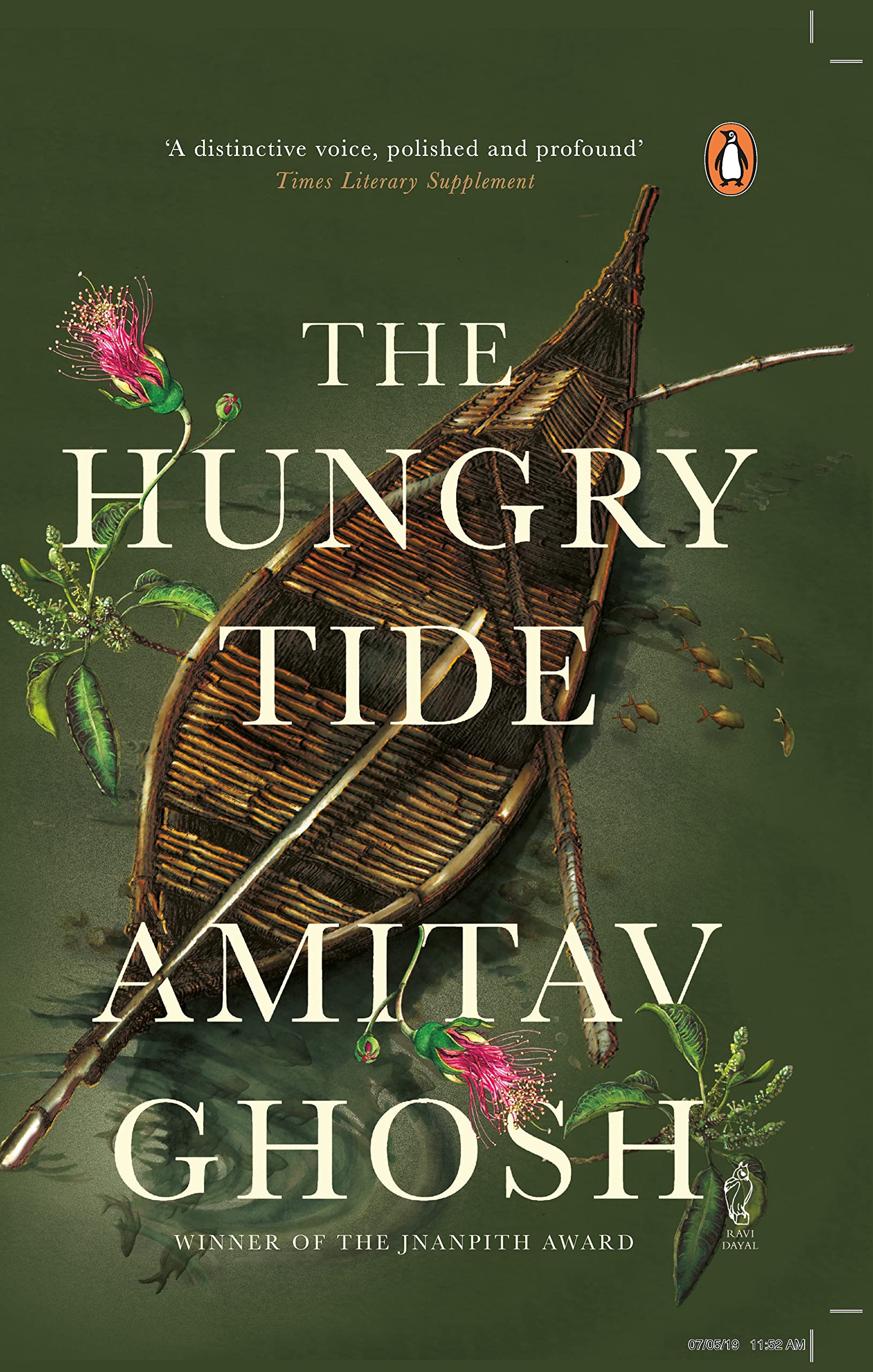
Book of the Day · 4 November 2026
The Hungry Tide
by Amitav Ghosh
Theme: India & Indian Voices
Recommended for: Young adults and adults
WHY THIS BOOK?
What happens when human lives collide with the powerful forces of nature? The Hungry Tide takes readers into the Sundarbans, a vast and mysterious region of mangrove forests, winding rivers and tidal islands shared by India and Bangladesh. Through an unforgettable story of people, wildlife and survival, Amitav Ghosh explores the delicate relationship between humans and nature, the struggles of marginalized communities and the difficult choices that arise when conservation and livelihoods come into conflict.
THE BOOK IN A NUTSHELL
Set in the Sundarbans of Bengal, The Hungry Tide follows Piya Roy, an Indian-American marine biologist who arrives in the region to study the rare Irrawaddy dolphins. There, she meets Kanai Dutt, a translator visiting his aunt, and Fokir, a local fisherman whose intimate knowledge of the waterways becomes invaluable to Piya's research.
As their paths cross, the three characters develop an unexpected connection. Piya's scientific training and Fokir's traditional understanding of the natural world offer different ways of interpreting the same environment. Their experiences reveal the challenges of conducting research in a landscape where tides, storms and dangerous wildlife shape everyday life.
The novel also explores the region's painful history, including the displacement of refugees and the tensions between wildlife conservation and the needs of local communities. Through these intertwined stories, Ghosh examines questions of belonging, cultural identity, environmental responsibility and the unequal burdens faced by people living on the margins of society.
The Sundarbans becomes more than a setting: it is a powerful presence that shapes the characters' choices and reminds readers of nature's unpredictability. The novel invites us to consider whether protecting the environment and protecting human livelihoods must always be competing goals.
💡 3 IDEAS WORTH TAKING AWAY
Nature deserves both respect and understanding — Human beings are part of complex ecosystems, and our actions can have far-reaching consequences.
Different kinds of knowledge matter — Scientific research and local experience can complement each other and offer a fuller understanding of the world.
Conservation requires compassion — Protecting wildlife is important, but the needs and dignity of communities living alongside it must also be considered.
🤔 THINK ABOUT IT
How can we protect endangered wildlife while respecting the livelihoods of people who depend on the same environment?
What can traditional knowledge teach us that scientific research alone might overlook?
How should society balance environmental protection with the needs of vulnerable communities?
WHO SHOULD READ IT?
A compelling choice for readers interested in Indian literature, environmental fiction, wildlife conservation and social issues. Especially recommended for young adults and adults who enjoy stories that combine human relationships with questions about ecology, culture and the complex relationship between people and the natural world.
A THOUGHT TO CARRY WITH YOU
To protect the natural world, we must understand not only the creatures that inhabit it, but also the people whose lives are intertwined with it.
📚 Read it, don't just read about it.
Akshar Bharati — Spreading Joy Through Reading
Comments (0)
No comments yet. Be the first to share your thoughts!