Book of the Day · 8 November 2026
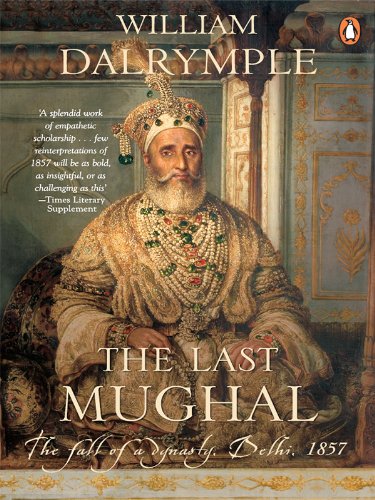
The Last Mughal
by William Dalrymple
Theme: History & Civilizations
Recommended for: Young adults and adults
WHY THIS BOOK?
What happens when an empire that has ruled for centuries faces its final days? The Last Mughal takes readers into the dramatic final chapter of the Mughal Empire, exploring the life of Bahadur Shah Zafar, its last emperor, during the Indian Rebellion of 1857. Through a compelling blend of history, culture and personal tragedy, William Dalrymple reveals how the fall of an empire transformed Delhi and changed the course of India's history.
THE BOOK IN A NUTSHELL
William Dalrymple's The Last Mughal explores the decline of the Mughal Empire through the life of Bahadur Shah Zafar, a poet and emperor who ruled from Delhi during a period of immense political upheaval.
By the mid-19th century, the Mughal Empire had lost much of its former power, while the British East India Company had become the dominant political force across large parts of India. When the rebellion against Company rule erupted in 1857, the elderly Zafar became an unlikely symbolic leader for the rebels.
Drawing on contemporary records, letters, diaries and eyewitness accounts, Dalrymple reconstructs the events that engulfed Delhi during the uprising. He explores the experiences of its residents, the violence of the rebellion and its suppression, and the devastating consequences for the city's people and cultural life.
Following the British recapture of Delhi, Zafar was arrested, tried and exiled to Rangoon, where he died in 1862. His fate marked the end of the Mughal dynasty and symbolized the profound changes brought about by the rebellion.
Beyond the fall of an empire, the book offers a portrait of Delhi's rich cultural world, including its poetry, traditions and diverse communities. It shows how political conflict can reshape not only governments but also the lives, memories and identities of ordinary people.
💡 3 IDEAS WORTH TAKING AWAY
History is shaped by turning points — A single period of political upheaval can transform the future of a nation and its people.
Cultural heritage deserves protection — The loss of an empire can also mean the destruction of traditions, communities and artistic life.
Understand history through different voices — Letters, diaries and personal accounts help us see historical events beyond the actions of rulers and armies.
🤔 THINK ABOUT IT
How can the fall of a powerful empire change the identity of a city and its people?
Why is it important to understand historical events through the experiences of ordinary people as well as rulers?
What can the events of 1857 teach us about power, resistance and the consequences of conflict?
WHO SHOULD READ IT?
A compelling choice for readers interested in Indian history, the Mughal Empire, colonialism and the events of 1857. Especially recommended for young adults and adults who enjoy detailed historical narratives and want to understand the people, culture and circumstances behind one of the most significant turning points in India's past.
A THOUGHT TO CARRY WITH YOU
The end of an empire is not just the fall of a throne; it is the transformation of an entire world.
📚 Read it, don't just read about it.
Akshar Bharati — Spreading Joy Through Reading
Comments (0)
No comments yet. Be the first to share your thoughts!